The first question I ask a new dealer is, “What do you count as a lead?”
The answer changes everything that follows. Some owners count every call and form. We count someone who should be booked for a water test or consultation. A dealer we spoke with recently got cold feet over a $90 cost per lead. At his other company, he shut down any campaign that went over $75. But his $75 was for raw calls and forms, and our $90 was for people who should be booked. He’d also planned around a 20% close rate as his worst case. His real close rate was about 70%.
Same business, very different math. So before talking about junk leads, it helps to agree on what a good one is.
We follow every lead through three steps:
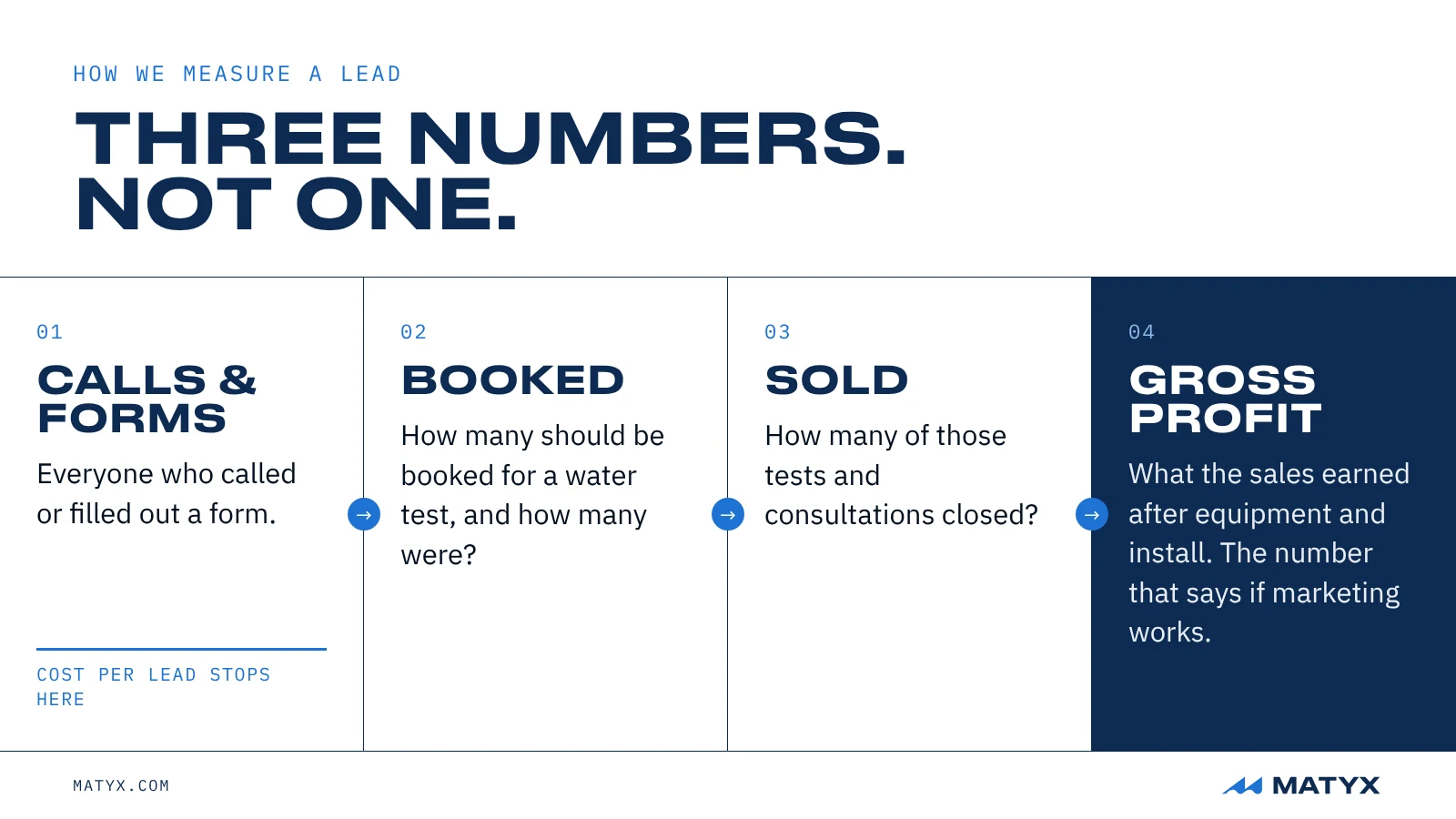
Cost per lead only describes the first step. A campaign can look cheap there and still lose money by step three. A simple example: $1,000 in ad spend that produces $5,000 in sales at a 40% gross margin leaves $2,000 in gross profit. That’s the number that tells you whether your marketing works.
One multi-location dealer we work with went through every lead they lost in August, one at a time. Of 41 lost leads, 31 were never sellable. Most fell into three groups:
In the first 12 days of November, another of their markets brought in 21 leads:
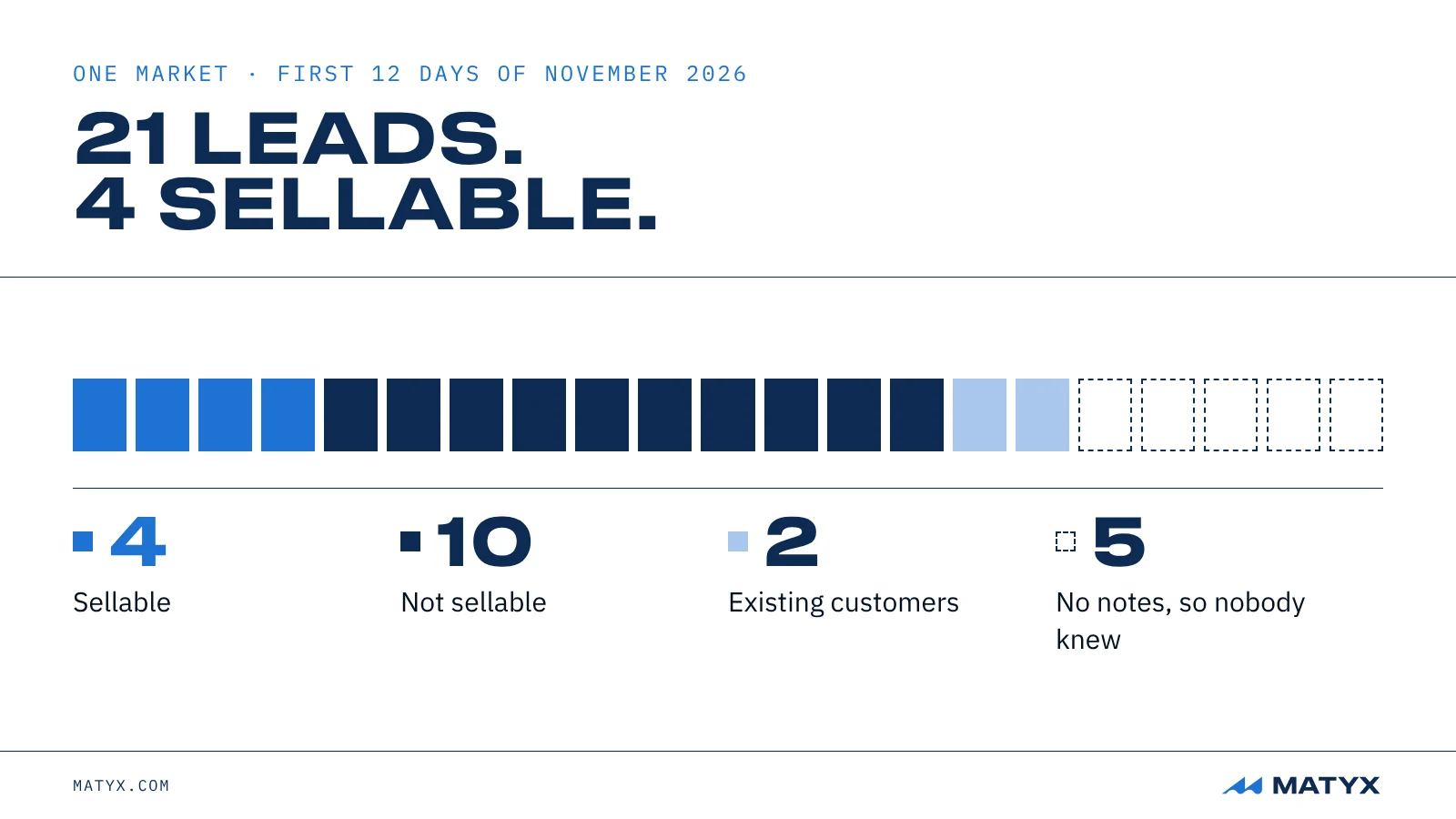
No one could say whether those last five were good or bad, because nothing had been written down.
That same month, another of the dealer’s offices had five leads marked “not sure.” Once someone read the call notes, all five turned out to be warm. The office went from looking like a problem to having nearly all its leads in play.
We’ve also seen a sales rep turn away condo and apartment leads, thinking the company couldn’t serve them. It could.
The bigger version of this showed up when we studied 64,344 Google reviews of 915 water treatment dealers. The most common complaint in 1–2 star reviews was that nobody called back. It appears in about 26% of them, including people who asked for a quote and never heard anything. In a lead report, a lead nobody called looks exactly like a bad lead.
So before changing the ads, check two things: is every lead labeled, and did every lead get a call back?
Use a short list in your CRM: sellable, not sellable, spam, existing customer, out of area. Put the detail (“called about their water bill”) in the notes. When the dealer above first looked at their lost-reason field, it was full of typos and duplicates and told them nothing. A short list fixed that.
Generic negative keyword lists help, but the best ones come from your own lost leads. For this dealer, that meant terms like “utility company” and “water bill,” and shifting some budget from “water testing” searches toward systems and treatment, without cutting off test bookings.
It’s tempting to cut every keyword that ever brought in a bad lead. But many of those searches also bring in buyers, and cutting everything at once can leave the phones quiet. Adjust one group of keywords, watch the results, then move to the next.
Google Ads defaults to “Presence or interest,” which can show ads to people outside your area who are searching about it. For a local installer, “Presence” (people in or regularly in your area) is usually the better fit. One owner told us his previous agency’s first month of ads ran in India and Pakistan. He found out from the 1 a.m. form fills.
Add spam protection, ask for a ZIP code, and ask one qualifying question, such as “Do you own your home?” Filtering alone can make a big difference: for Tri-County Water Specialists, spam rules now flag more than a quarter of inbound volume before it reaches a rep.
Google Ads optimizes toward whatever you count as a conversion. Google’s own guidance for lead-generation advertisers is to measure qualified or converted leads, through offline conversion imports or enhanced conversions for leads. When your CRM reports which leads were sellable and which became sales, the ads can learn from it. That only works if step 1 is done.
The review study turned up one more pattern. About 1 in 7 one-star reviews came from people who never bought anything. They were reacting to the marketing itself: mailers made to look like official notices, gift-card offers with strings attached, and door-knocking past No Soliciting signs.
Those tactics can produce plenty of leads. They also produce reviews that every future customer reads. If an offer would embarrass you in a review, the lead isn’t worth it.
If you’d like a second opinion on your lead quality, talk to our paid ads team.
About the review study: in September 2026, Matyx pulled up to the 100 newest Google reviews for 915 residential water treatment dealers (64,344 reviews), then hand-coded every 1–2 star review. Percentages are approximate.