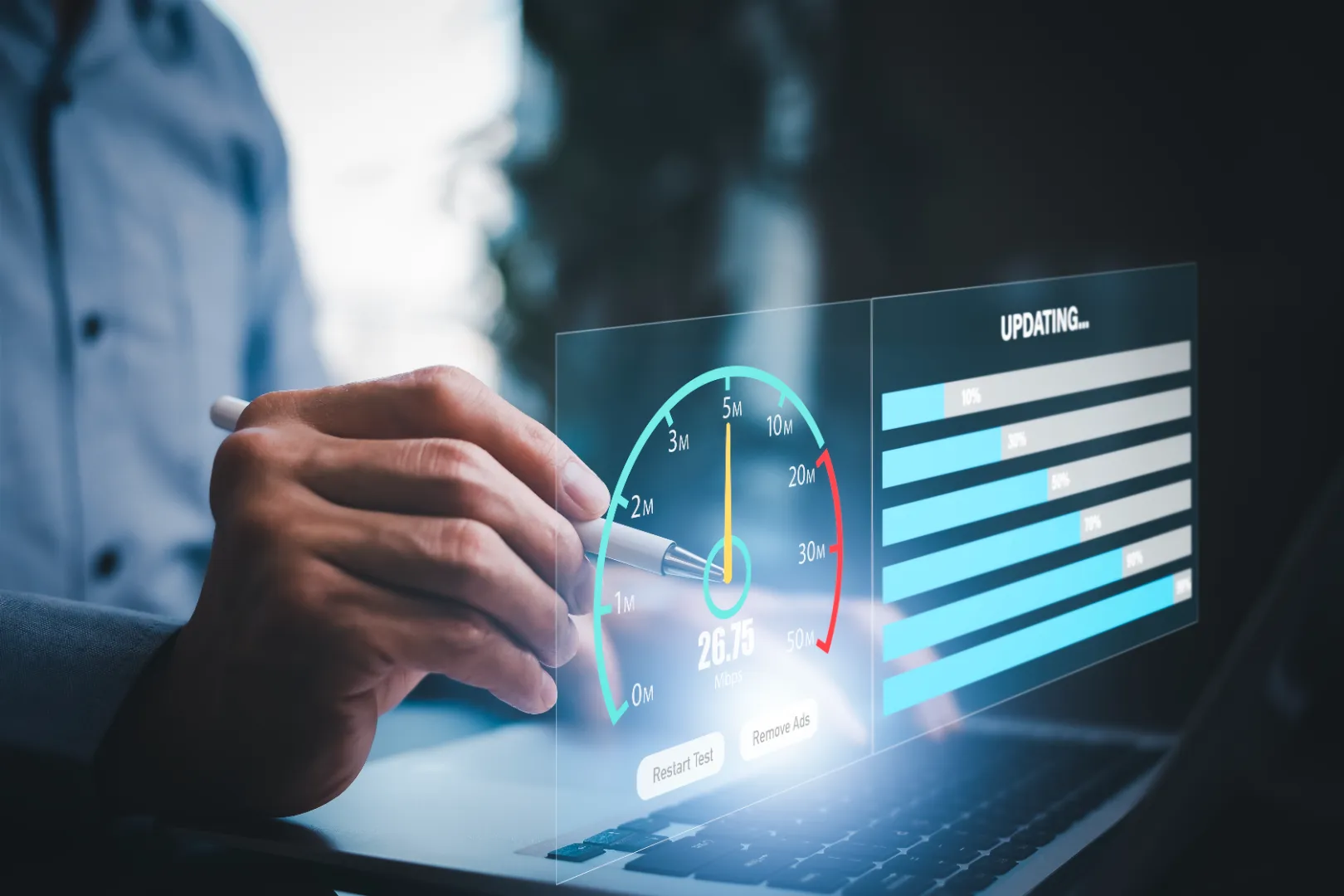
Website speed shapes first impressions fast. A slow page creates friction before a visitor even reads the headline or sees the offer, while a fast page helps users trust the site and complete the next step without hesitation.
Search engines want to surface pages that create a strong experience, and users reward fast sites with better engagement. Keep Largest Contentful Paint under 2.5 seconds, Interaction to Next Paint under 200 milliseconds, and Cumulative Layout Shift under 0.1 for a visually stable layout.
A faster website improves conversions and SEO by reducing friction.
Speed affects conversions because it affects momentum. When a page loads quickly, users stay focused and can absorb the message, scan the offer, and take action without interruption, but hesitation creeps in before the decision point on a slow page.
The first few seconds matter most. That's when visitors decide whether the site feels trustworthy and easy to use. If the hero image drags or the page shifts while loading, confidence drops, and conversion rates usually drop with it.
Speed optimization also supports wider business goals. A fast site helps every marketing channel work harder, since search traffic, paid traffic, and email visitors all convert more efficiently.
"Technical improvements like better server response time and preloaded critical assets aren't glamorous on their own, but together they create a faster and more reliable buying experience."
Sites that load quickly keep more visitors engaged.
Users don't think about scripts or caching, they simply notice whether a site feels easy or frustrating to use.
Mobile performance now carries much of the conversion burden for most sites. A mobile visitor may be on a weaker connection and decides quickly whether a site is worth their time, so heavy or cluttered pages are far more likely to lose that visitor.
"When mobile pages feel light and responsive, conversion friction drops, making mobile speed one of the most practical revenue improvements available."